Animal Activities for Preschool and Kindergarten
Explore animal body coverings, habitats, camouflage, and more with these hands-on science and math activities for young learners. These classroom-tested ideas encourage children to observe, compare, investigate, and learn about animals through play.
More Animal Themes and Activities
Looking for more animal teaching ideas? Explore these related themes:
Animal Body Coverings Activities
Help students discover how animals are covered with fur, feathers, scales, and shells. These hands-on activities encourage children to compare animals and learn how body coverings help protect them.
Animal Body Coverings Matching Bracelets
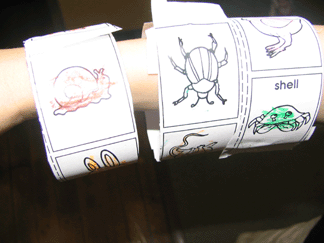
These animal matching bracelets came from a Teacher’s Helper magazine. Children twist the bracelets to match two animals with the correct type of body covering, such as fur, feathers, or shells.
This is a fun way to practice identifying animal characteristics while developing matching and classification skills.
How Does a Turtle’s Shell Protect It?
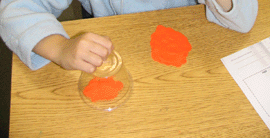
We made two turtles from playdough to investigate how a turtle’s shell helps protect it.
A student pressed down on the first playdough turtle with her hand, flattening it. She placed a plastic cup over the second turtle and tried again. The cup prevented her from flattening the turtle underneath.
We discussed how the cup represented a turtle’s hard shell and how a real shell helps protect the animal’s body.
Animal Body Coverings Show and Tell
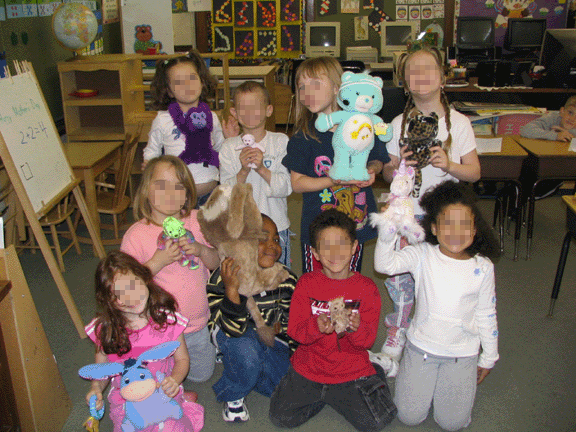
Students brought toy animals for show and tell. After sharing their animals with the class, we sorted them into groups based on their body coverings.
Children practiced observing animal characteristics and explaining why each animal belonged in a particular group.
Animal Homes and Habitats
Where do animals live? These activities help children match animals to their homes and discover that different animals need different types of habitats.
Animal Habitat Dominoes
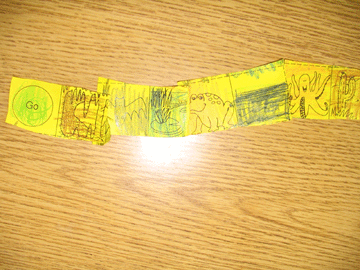
We played this habitat domino game from Teacher’s Helper magazine. Children matched the animal on one domino with its habitat on another domino.
The game gives students practice recognizing different animal homes while strengthening visual discrimination and matching skills.
Animal Habitat Matching Wheel
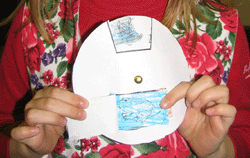
This habitat matching wheel, also from Teacher’s Helper magazine, allows children to turn the wheel and match each animal with its home.
Students can use the wheel independently or with a partner to review animal habitats.
Find Your Animal Home Partner
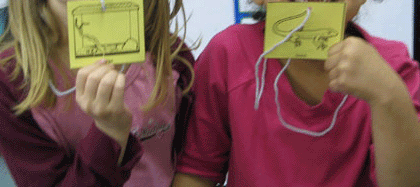
Each student wears a necklace featuring either an animal or an animal’s home. Children move around the classroom to find the classmate whose picture matches theirs.
Once everyone has found a partner, students can share their animal and habitat matches with the class.
Animal Camouflage Activities
Introduce camouflage by showing children how animals can blend into their surroundings. Discuss how camouflage can help animals hide from predators or approach prey.
Camouflage Animal Cut-and-Paste Activity
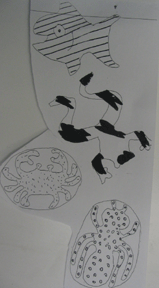
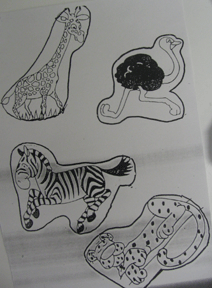
Before beginning this activity, we looked at photographs of military camouflage uniforms. We talked about how green camouflage can blend with vegetation and tan camouflage can blend with sandy surroundings.
Next, we discussed how animals use colors and patterns to blend into their natural habitats.
Students received an animal background and animal pictures to cut out. Their challenge was to find the best places to hide the animals by matching them with similar colors or patterns in the background.
Extension activity: The next day, children brought stuffed animals from home and searched for places around the classroom where their animals could be camouflaged.
Hide the Polar Bear
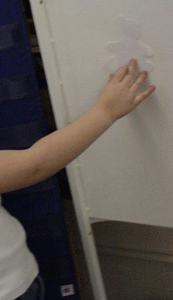
We demonstrated camouflage by finding a place to hide a white polar bear made with an Ellison die cut.
Children observed how the polar bear was easier or harder to see depending on the color of the background.
More Animal Science and Math Activities
Move as Slowly as a Sloth
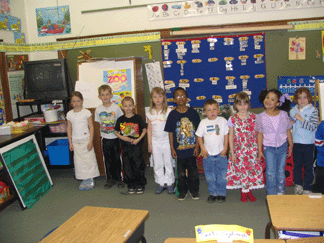
During our rainforest unit, we learned about the remarkably slow movement of three-toed sloths. Our classroom resource reported that a sloth could move only about six feet in one minute.
To explore just how slowly that is, we lined up, watched the second hand on the clock, and took tiny steps as we tried to move as slowly as a sloth for one minute.
This simple movement activity combines animal science with an introduction to time and distance.
Reptile Addition Math Mat
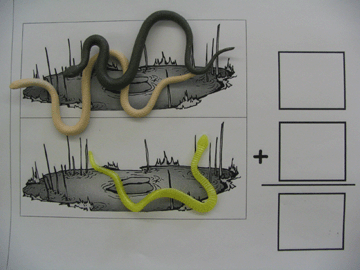
Students used small rubber snakes as manipulatives on an addition math mat to solve number problems.
The activity can easily be adapted to other animal themes by changing the manipulatives and background:
- Pond animals: Use frogs or ducks.
- Ocean animals: Use small fish counters or goldfish crackers.
- Farm animals: Use farm animal counters with a barnyard mat.
- Zoo animals: Use zoo animal figures and zoo-themed mats.
Children can model addition problems by placing one group of animals on the mat, adding another group, and counting how many animals there are altogether.
Snake Pattern Craft
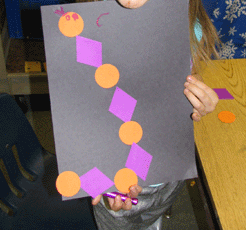
This student-created snake features an AB repeating pattern.
Children can make their own patterned snakes using alternating colors or shapes. For an additional challenge, encourage students to create more complex patterns, such as AAB or ABC.
This activity combines early math patterning skills with a fun animal craft.