Animals in Winter Teaching Theme
Explore how animals survive the winter through hands-on activities about hibernation, migration, and animals that stay active during cold weather.
Hibernation
Hibernation Day
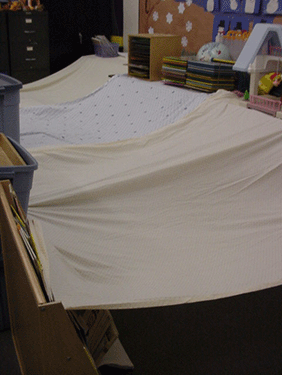
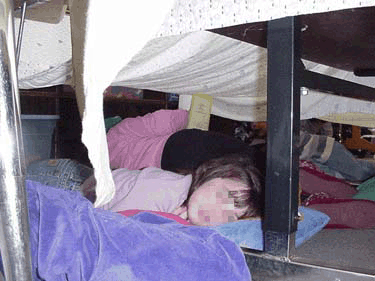
We transformed our classroom into caves and spent most of the morning participating in quiet activities, such as reading, inside our caves.
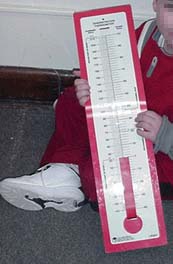
Every so often, we checked the temperature on our thermometer to see if it was time to wake up.
Had it gotten warm enough yet?
Time for Hibernation
Tune: “Frère Jacques”
Are you sleeping, are you sleeping,
Big black bear, big black bear?
Time for hibernation.
What is your location?
In a log, in a lair.
Are you sleeping, are you sleeping,
Hanging bat, hanging bat?
Time for hibernation.
What is your location?
In a cave is where I’m at.
Are you sleeping, are you sleeping,
Garter snake, garter snake?
Time for hibernation.
What is your location?
In the mud, in a lake.
Are you sleeping, are you sleeping,
Toad and frog, toad and frog?
Time for hibernation.
What is your location?
In a pond, near a log.
Are you sleeping, are you sleeping,
Meadow mouse, meadow mouse?
Time for hibernation.
What is your location?
In a field, near a house.
Are you sleeping, are you sleeping,
Turtle friend, turtle friend?
Time for hibernation.
What is your location?
In the stream, till winter’s end!
Waking Up Hungry!
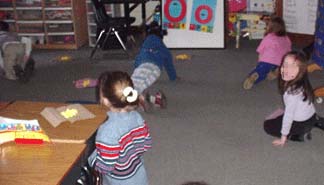
Just as bears use their sense of smell to help find food when they wake up, we crawled around the classroom sniffing for our food after our pretend hibernation.
Popcorn was scattered on paper towels in various places throughout the classroom for us to discover.
Hibernation Rhyming Game
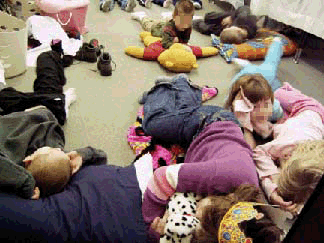
We played a hibernation rhyming game to practice listening for rhyming words.
First, we pretended to sleep while the teacher said two words.
If the words did not rhyme, we stayed asleep.
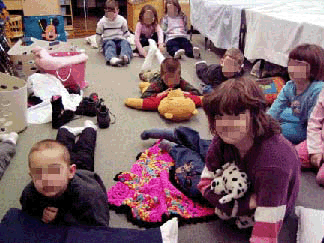
But if the two words rhymed, we woke up!
Make a Bear Cave
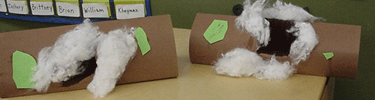
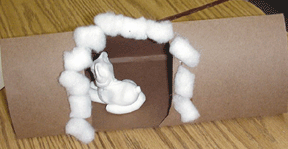
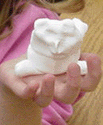
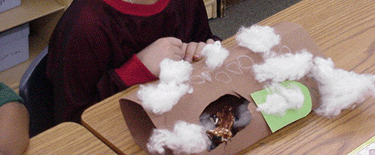
We made our own bear caves using brown construction paper and created little bears to live inside them.
Materials:
- Brown construction paper
- Glue
- Scissors
- Fiberfill or cotton balls
- Materials for making bushes
- Crayola Model Magic
- Brown markers
Instructions:
- Fold a sheet of brown construction paper in half twice.
- Overlap the two ends and glue them together to form a triangular cave.
- Cut an opening for the cave entrance.
- Glue fiberfill or cotton balls around the entrance to resemble snow.
- Add bushes around the opening.
- Sculpt a small bear using Crayola Model Magic.
- Allow the bear to dry, then color it brown with a marker.
- Place the finished bear inside its cave.
Migration
Learning About Migration
We learned that some animals migrate to warmer areas when the weather turns cold.
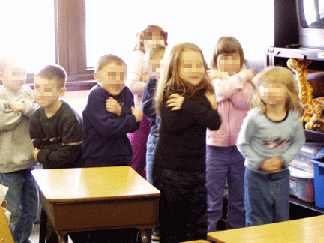
We’re standing in the North, where it’s cold outside! A nearby sign marks our location.
We talked about why some animals migrate when temperatures drop.
Flying Like Geese
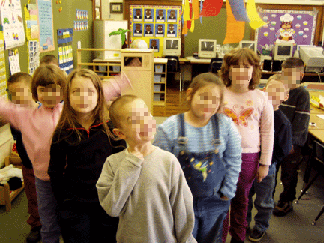
Geese often fly in a V formation when they migrate south.
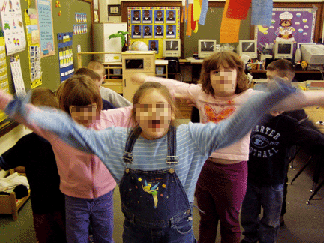
The geese take turns being the leader at the point of the V. Flying at the front requires extra effort because the leader doesn’t benefit from the air currents created by another bird ahead.
We practiced flying in a V formation and taking turns as the leader.
Finding Food After Migration
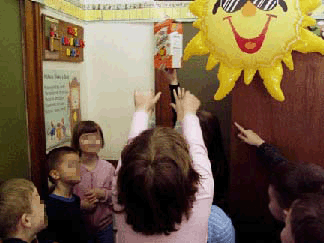
After arriving in the South, migrating geese can find food more easily.
We enjoyed a snack of Goldfish crackers, although we doubt real geese find boxes of crackers waiting for them!
Active Animals
Finding Food in Winter
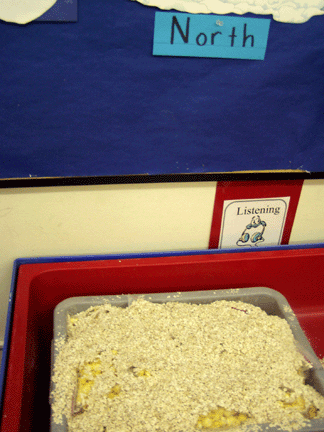
Animals that remain active during winter must continue searching for food, even when the ground is covered with snow.
Our teacher hid pretend food in the water table and buried it under pretend snow.
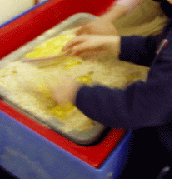
We dug through the snow to uncover our food, just as animals might search for food during the winter.
Animal Tracks in the Snow
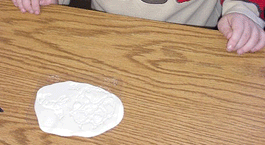
We read a book about animal tracks in the snow and looked at pictures of different types of animal footprints.
Then we used animal footprint models to press tracks into Crayola Model Magic, creating impressions that looked like footprints in the snow.
Animal Track Rubbings
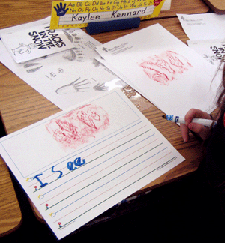
We also used our footprint impressions to create crayon rubbings.
Materials:
- Animal footprint impressions made with Model Magic
- Paper
- Crayons
- Story writing paper
Instructions:
- Place a dried animal footprint impression underneath a sheet of paper.
- Rub the side of a crayon over the paper to reveal the footprint pattern.
- Practice making rubbings with different animal tracks.
- Create a final footprint rubbing on story paper.
- Write a sentence or short story about the animal that made the tracks.
Animal Tracks Resource
Visit Bear Tracker for information and examples of animal tracks.