Force and Motion Science Activities for Kindergarten
We investigated force and motion as part of our kindergarten science curriculum. Through hands-on experiments, students explored how objects move, how different surfaces affect movement, and how pushing, blowing, and using ramps can make objects move.
Exploring Rolling Motion
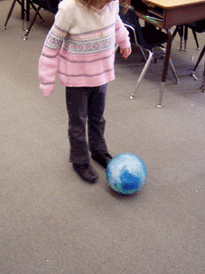
We began by observing the rolling motion of a ball.
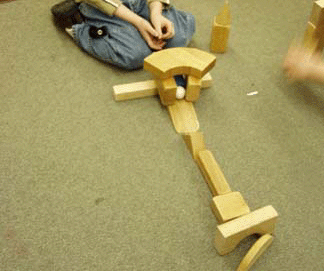
This boy devised his own ramp to make his ball roll.
Transportation Testing: Will It Roll?
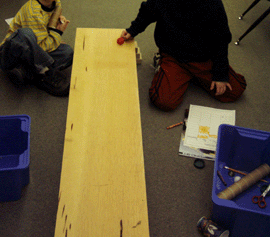
One of our science centers was called Transportation Testing.
First, we predicted whether common classroom objects would roll.
Objects We Tested:
- Paper clip
- Crayon
- Scissors
- Bean
- Cup
- Button
- Cotton ball
- Pencil
- Block
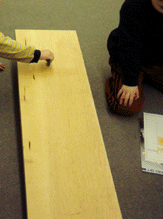
Next, we tested each object on a ramp to find out whether our predictions were correct.
When we finished testing the classroom objects, we experimented with rolling different toy cars down the ramp.
Exploring Pushes, Friction, and Wheels
Can You Move a Heavy Basket?
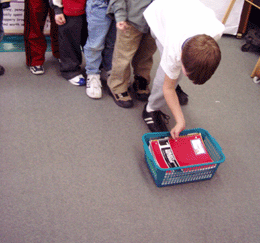
Each child tried pushing a heavy basket filled with books using only their pinky finger.
It was hard to move!
We later learned that friction was one of the forces making the basket difficult to push.
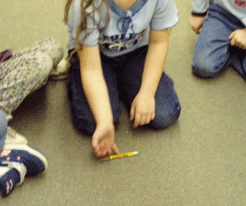
This girl discovered that she could easily push a pencil with her pinky finger.
Making Movement Easier with Wheels
We talked about one of the most useful inventions: the wheel.
We placed pencils underneath the heavy basket to act as rollers.
With the pencils underneath, the basket was much easier to move!
How Do Different Surfaces Affect Motion?
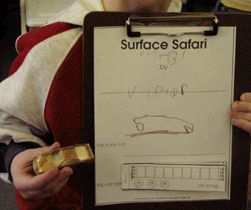
One of our investigations involved rolling a toy car across different surfaces and comparing how it moved.
Students made observations and recorded their results.
This student drew a picture of his car and used a clipboard to record how the car rolled on each surface.
Testing Different Surfaces
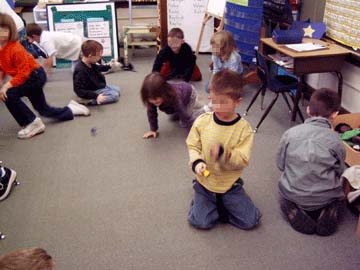
First, we rolled our cars on carpet.
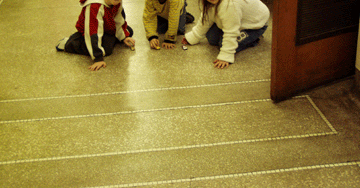
Next, we tested the cars on a smooth floor.
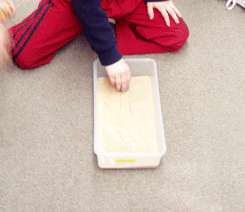
Then we rolled the cars on dry sand.
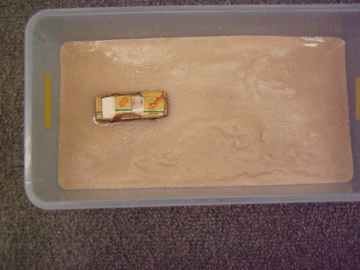
We compared the results with cars rolling on wet sand.
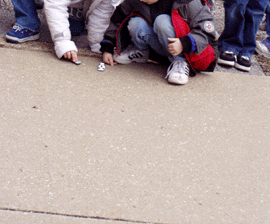
How would the cars roll on the sidewalk?
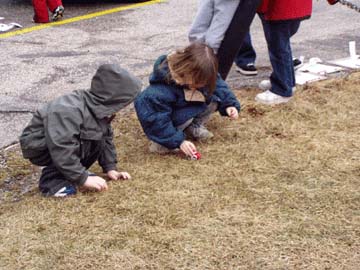
What about the grass?
We compared how easily the cars moved on each surface and discussed how different textures affected their motion.
Can You Move a Car Without Touching It?
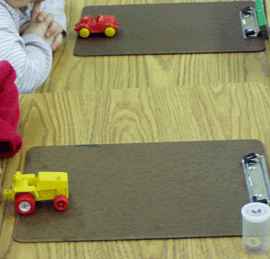
I challenged the children to find a way to move a toy car without touching it with their hands.
I should have guessed that one student would try pushing the car with his head!
So I changed the challenge:
Can you move the car without touching it with any part of your body?
We placed the car on a clipboard to provide an extra-smooth surface.
The students came up with several creative solutions.
Moving a Car with a Pencil
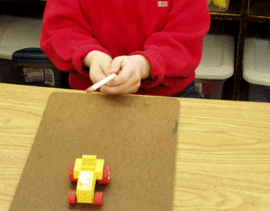
This boy used a pencil to push his car.
Moving a Car with Air
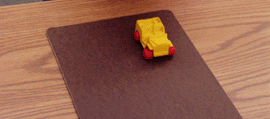
This girl discovered that she could move her car by blowing on it.
Making a Ramp with a Clipboard
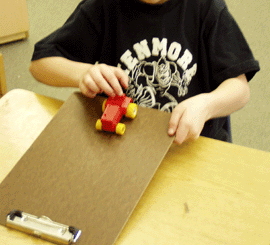
This boy lifted one end of his clipboard, creating a ramp that allowed the car to roll downhill.
Making a Ramp with a Desk
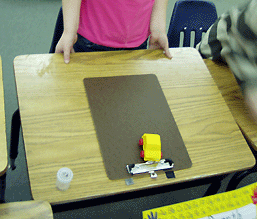
This child raised one side of her desk to create a ramp for the toy car.
Testing a Foam Block on a Ramp
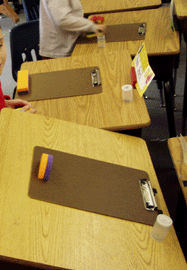
This boy investigated whether a foam block could move down a ramp made by tilting his desk.
Can You Move a Block by Blowing on It?
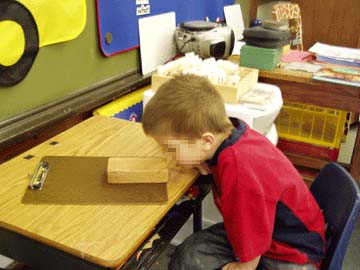
This student tried moving a wooden block by blowing on it.
We discovered that blowing on the wooden block did not move it, but blowing on a lightweight foam block did!
This led to a discussion about how the type of object and the amount of force applied can affect whether something moves.
Science Concepts Explored
Through these investigations, students explored:
- Force: A push or pull that can change an object’s motion.
- Motion: How objects move from one place to another.
- Friction: A force that resists sliding between surfaces that touch.
- Ramps: Inclined surfaces that allow objects to move downhill.
- Wheels and Rollers: Tools that help objects move more easily.
- Gravity: The force that pulls objects downward and helps cars roll down ramps.
Students also practiced making predictions, testing ideas, observing results, and comparing their findings.